Hi all,
There apparently there was a problem with the blog post this week. Our word work quiz will be postponed until next Friday.
Only three class members brought flashlights. I more come to class we will be able to have Flash light Friday. If not, it will need to be cancelled. Please bring one A.S.A. P.
Thanks!
Mrs Diduch
Friday, 13 March 2020

Wednesday, 4 March 2020
New Science Unit Light and Shadow
By the end of this unit students should be able to:
Students will be able to:
Recognize that eyes can be damaged by bright lights and that one should not look at the Sun—either directly or with binoculars or telescopes.
Identify a wide range of sources of light, including the Sun, various forms of electric lights, flames, and materials that glow (luminescent materials).
Distinguish objects that emit their own light from those that require an external source of light in order to be seen.
Demonstrate that light travels outward from a source and continues unless blocked by an opaque material.
Describe changes in the size and location of Sun shadows during the day—early morning, to midday, to late afternoon
Recognize that opaque materials cast shadows, and predict changes in the size and location of shadows resulting from the movement of a light source or from the movement of a shadecasting object.
Distinguish transparent materials from opaque materials by determining if light passes through them and by examining their shadows.
Classify materials as transparent, partly transparent (translucent) or opaque.
Recognize that light can be reflected and that shiny surfaces, such as polished metals and mirrors, are good reflectors.
Recognize that light can be bent (refracted) and that such objects as aquaria, prisms and lenses can be used to show that light beams can be bent.
Recognize that light can be broken into colours and that different colours of light can be combined to form a new colour.
Demonstrate the ability to use a variety of optical devices, describe how they are used, and describe their general structure. Suggested examples include: hand lens, telescope, microscope, pinhole camera, light-sensitive paper, camera, kaleidoscope.
Vocabulary for the Unit: Colour, concave lens, convex lens, dispersion, emit, kaleidoscope, light, light meter, luminescent, magnify, opaque, prism, rainbow, reflect, refraction, shadow, translucent, transparent, visible spectrum, white light
Students will be able to:
Recognize that eyes can be damaged by bright lights and that one should not look at the Sun—either directly or with binoculars or telescopes.
Identify a wide range of sources of light, including the Sun, various forms of electric lights, flames, and materials that glow (luminescent materials).
Distinguish objects that emit their own light from those that require an external source of light in order to be seen.
Demonstrate that light travels outward from a source and continues unless blocked by an opaque material.
Describe changes in the size and location of Sun shadows during the day—early morning, to midday, to late afternoon
Recognize that opaque materials cast shadows, and predict changes in the size and location of shadows resulting from the movement of a light source or from the movement of a shadecasting object.
Distinguish transparent materials from opaque materials by determining if light passes through them and by examining their shadows.
Classify materials as transparent, partly transparent (translucent) or opaque.
Recognize that light can be reflected and that shiny surfaces, such as polished metals and mirrors, are good reflectors.
Recognize that light can be bent (refracted) and that such objects as aquaria, prisms and lenses can be used to show that light beams can be bent.
Recognize that light can be broken into colours and that different colours of light can be combined to form a new colour.
Demonstrate the ability to use a variety of optical devices, describe how they are used, and describe their general structure. Suggested examples include: hand lens, telescope, microscope, pinhole camera, light-sensitive paper, camera, kaleidoscope.
Vocabulary for the Unit: Colour, concave lens, convex lens, dispersion, emit, kaleidoscope, light, light meter, luminescent, magnify, opaque, prism, rainbow, reflect, refraction, shadow, translucent, transparent, visible spectrum, white light
Tuesday, 3 March 2020
Word Work List March 3-6
This weeks words focus on the 'er' sound: 'er', 'ir', 'ur' and 'ear"
- early
- earth
- service
- wonder
- surface
- curly
- shirt
- thirty
- another
- bakery
- search
- shower
Friday, 28 February 2020
Family Event
We have been learning about Alberta's Natural Resources in class and this event fits the theme.
Check out this exciting family fun event the SPE (Society of Petroleum Engineers) in Calgary is hosting! Drop in Saturday Feb 29th at SAIT to learn about the science behind oil and gas in an educational environment. There is something for all ages!
This fun family event aims to show off the innovative ways resource workers harvest the energy the world needs. Through hands-on experiments, guests will learn the science behind energy production - everything from fracking to density, porosity, and pressure. Get a chance to tour the SAIT facilities, meet students and professors, and even check out the rig simulator. There is something for everyone, in or out of industry, experience or none, young or old!
The event is open to the public and is for families, professionals, students, and children of all ages. Tickets are $10 per family.
Sign up here! https://www.eventbrite.ca/e/fracking-with-jello-2020-family-science-day-tickets-90567312269
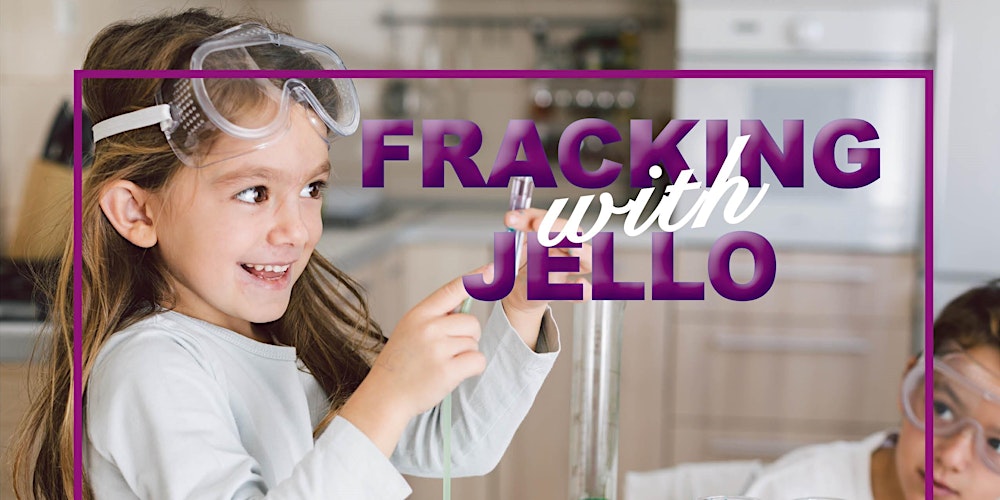 |
Eventbrite - SPE Young Professionals presents Fracking With Jello 2020: Family Science Day - Saturday, 29 February 2020 at Southern Alberta Institute of Technology, Johnson-Cobbe Energy Centre, Calgary, AB. Find event and ticket information.
www.eventbrite.ca
|
Tuesday, 25 February 2020
Items Sent Home
In our backpacks today you will find work from our unit on digit addition and subtraction, mapping from earlier in the year and the Jump rope for heart fundraiser. Our final quiz on multi-digit addition and subtraction will be next week.
Missing Phone!
If you see the phone of the following description please contact the office.
The make and model is a Samsung Galaxy J3. The colour is black with a large sticker on the back of it which looks like stained glass and the character “Link” from the Zelda video game. I was able to get the serial number (IMEI) from my purchase contract. The IMEI is 359229090701360. The screen saver while in the lock screen is a picture of a green car made out of Lego. The phone has a pattern lock on it as well.
Subscribe to:
Comments (Atom)